
In Bologna, a quiet shift in city-making has been taking shape. The Pietro Giacomo Rusconi Foundation for Urban Innovation (FRGU), born from the collaboration between the Municipality and the University, serves as a laboratory where new forms of urban life are tested. Its mission is not only technical—reshaping policies or upgrading public spaces—but also deeply human: to nurture trust between citizens and institutions, and to weave cultural and social initiatives that strengthen equity, well-being, and climate responsibility.
From this setting emerged Radically Adolescents, a city strategy that places young people at the centre of Bologna’s future. Instead of designing programs on their behalf, the administration chose to build the strategy with them, acknowledging teenagers as full partners in shaping the urban fabric.
Between April 2022 and March 2024, more than 700 voices joined the process: teachers and social workers, librarians and cultural operators, entrepreneurs and, crucially, students themselves. Together with municipal staff, university researchers, and representatives of the city’s six districts, they traced the outlines of what a city attentive to its adolescent
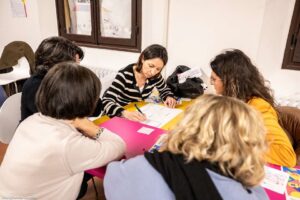
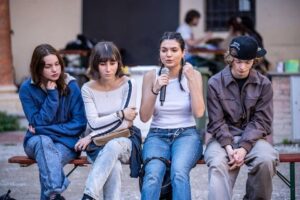
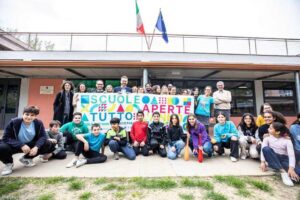
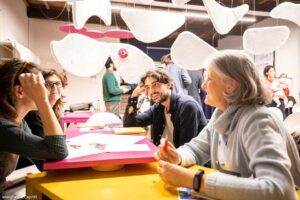
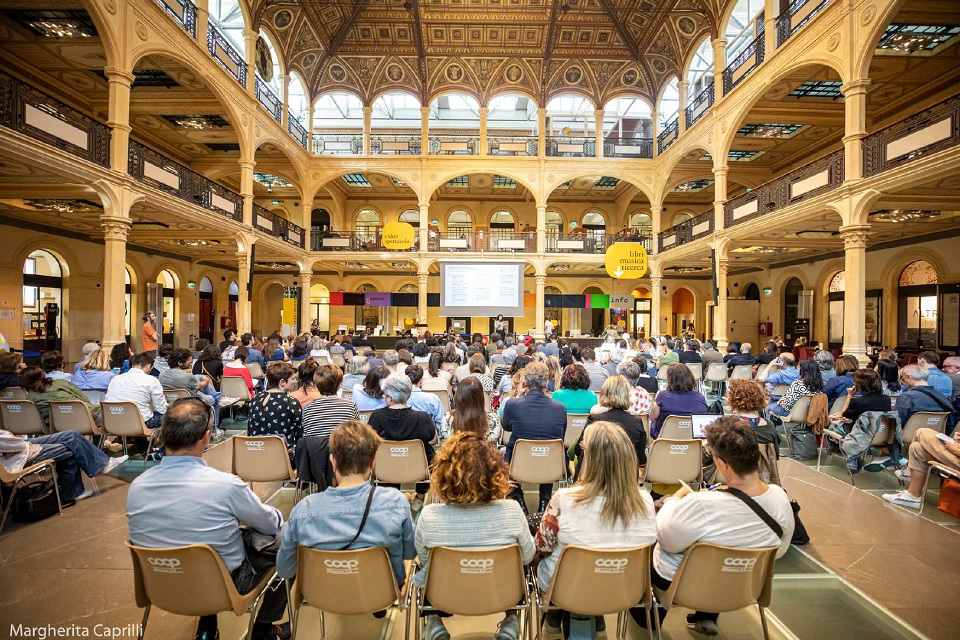
The path unfolded through lively encounters: a public assembly with 150 participants, neighbourhood focus groups, and workshops that used speculative design to imagine possible futures. Pilot projects tested ideas on the ground—keeping two schools open in the afternoons as shared spaces and organizing a youth-designed festival that mirrored the passions of sixty teenagers. Step by step, schools began to feel less like closed institutions and more like community anchors, extending their role beyond morning lessons.
From these experiments came a concrete roadmap of ten actions to be implemented over the next five years. The plan envisions middle schools open throughout the day and year, reimagined urban spaces managed by young people themselves, and mechanisms for youth representation in municipal policies. A dedicated community fund now supports their projects, while research into digital engagement helps guide families and educators.
Radically Adolescents is not just a strategy; it is a city-wide pact that sees teenagers not as passive recipients but as authors of Bologna’s evolving story
Bologna, like many contemporary societies, faces a complex set of challenges in how younger generations relate to education, citizenship, and collective life. A widening generation gap has become increasingly evident: adults and institutions often design policies and initiatives without the active contribution of adolescents, while young people tend to perceive educational and civic processes as distant from their everyday realities. This distance weakens the sense of belonging and limits the possibility of creating shared perspectives on the city’s future.
A further difficulty lies in the limited involvement of youth in issues directly affecting them, such as the organization of schools, cultural initiatives, or the use of public spaces. Their participation is frequently reduced to passive roles, with little influence on decision-making processes. At the same time, intergenerational dialogue remains fragile. Opportunities for meaningful exchange between young people, families, educators, and professionals are scarce, which prevents the transmission of experiences and knowledge across age groups.
Finally, fragmentation characterizes the educational landscape. Teachers, cultural operators, social workers, and families often work in isolation, lacking structured channels for collaboration. This disconnect hampers the creation of a shared vision and reinforces the difficulties of addressing youth needs collectively
The project redefines educational approaches for adolescents by combining active listening with proximity work, turning local needs into concrete actions at the municipal scale. It represents a distinctive initiative in the Italian context, as it has enabled Bologna to adopt an educational strategy co-designed with its educating community and young people. The process has produced measurable changes aimed at inclusion, participation, and collective well-being.
The initiative pursued several objectives. First, it mapped neighbourhood-level needs, identifying both challenges and opportunities related to education. Second, it fostered a collaborative network that connects teachers, educators, libraries, museums, social workers, and cultural institutions, encouraging the exchange of knowledge and practices.
Third, it promoted intergenerational dialogue, positioning young people as active contributors to the design of urban education policies.
A youth representation and a community fund were created to turn adolescent ideas into projects. Schools became community hubs with extended hours, non-school spaces were upgraded through participatory programming, and digital practices were examined to support families and educators with shared responses.
The project has generated significant outcomes, strengthening the relationship between the city administration, schools, and young people while shaping a long-term vision for education in Bologna.
A co-designed program for educational policies has been established, resulting in a shared vision that reflects the priorities of the city’s districts. This process produced a comprehensive mapping of educational needs, enabling more targeted interventions. The outcomes are documented in the city’s official programming framework.
Youth engagement has been central to the initiative. A festival co-designed with 60 adolescents successfully placed their perspectives at the centre of public debate, while a series of ten focus groups with high school representatives laid the groundwork for the creation of youth delegates beginning in 2024.
A €30,000 community fund, available from 2025, will further support projects initiated by young people, fostering both creativity and civic responsibility.
Pilot projects tested structural innovations. Two schools remained open year-round, transforming into community hubs, while extracurricular spaces are being renovated and will offer youth- and family-oriented programming from 2025. These actions expand the role of educational facilities beyond traditional instruction, positioning them as multifunctional urban spaces.
Finally, a research-action initiative, set to begin in late 2024, will examine the digital practices of adolescents aged 13–18.
The findings will guide educators and families in supporting healthier and more effective engagement with digital environments.
Overall, the project demonstrates how participatory design can translate into concrete actions, ensuring that education policy and urban transformation respond directly to the needs of younger generations.