
In 2009, architects Iyas Shahin and Wesam AlAsali founded IWLab—a laboratory for architectural inquiry where research, education, and hands-on practice come together.
Dividing their efforts between Syria and Spain, the duo set out to challenge entrenched architectural conventions across the Arab world. IWLab operates as more than a design studio; it is a space for experimentation, driven by questions of how architecture can respond to cultural memory, ecological relationships, and material specificity.
By engaging with local resources and traditions, the lab explores how to build not just in a place, but with it.
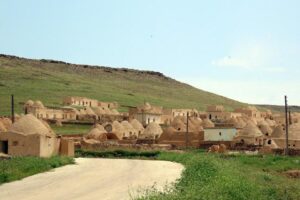
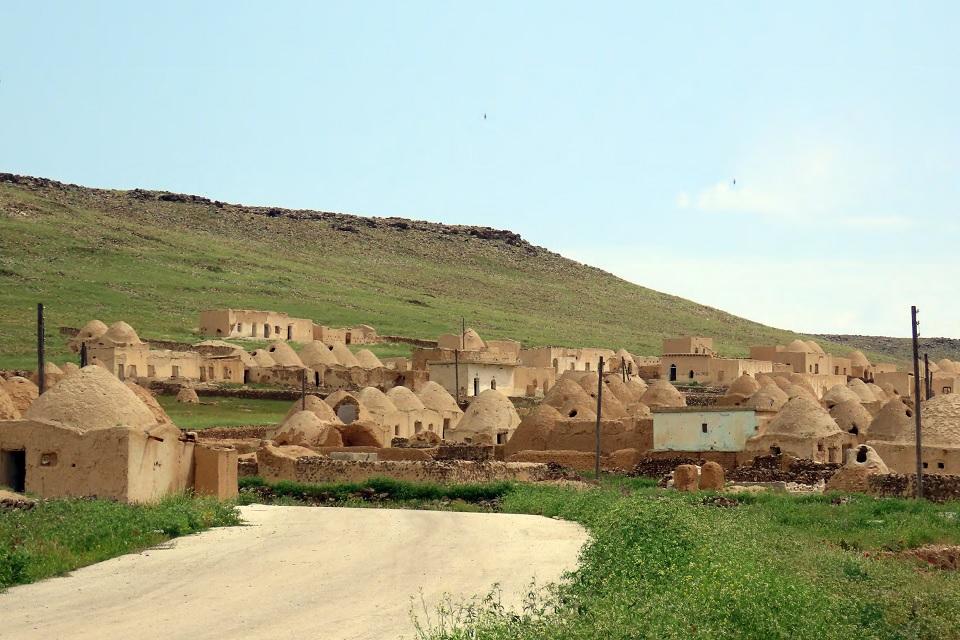
Among IWLab’s most layered and ambitious undertakings is the Rehabilitation of Bathet Um Myal, a village tucked into the undulating landscape of Southeast Aleppo, near the edge of the Syrian Badia.
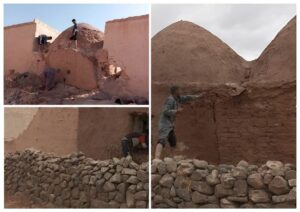
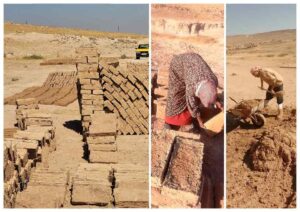
Once sustained by agriculture and collective labour, the village today stands in quiet disrepair. Its mudbrick domes—built by hand, clustered closely together, anchored by stone foundations—bear witness to a time when building was a communal act.
Animal barns, grain stores, and outdoor ovens (tanners) still stand, though cracked and crumbling, the result of years of abandonment caused by war, economic hardship, and isolation.
The project’s goals are rooted in three interconnected threads: to bring the original inhabitants back to the land, to recognize and preserve the heritage value of the village and its surroundings, and to promote sustainable ways of building and living.
Rather than imposing new solutions, IWLab listens—documenting oral histories, surveying mud architecture, and learning from the quiet intelligence embedded in vernacular forms. Their Atlas of Mud Architecture reflects this approach, assembling a record of rural building practices that are fast disappearing but still relevant in a world seeking ecological balance.
Um Myal is more than a case study—it is a living site of knowledge, memory, and possibility. Though much has been lost, the potential for renewal is real. IWLab’s work does not aim to recreate the past, but to draw from it—adapting ancestral techniques to today’s challenges and building toward a future that is both rooted and resilient. In doing so, the project reimagines what it means to inhabit a place with care.
The challenge faced by Bathet Um Myal, a rural village in southeast Aleppo, reflects the broader devastation experienced across Syria because of prolonged conflict. Years of war have left deep physical and social scars on the community. Infrastructure has collapsed, homes have been abandoned, and essential services such as water, electricity, transportation, and healthcare remain largely absent. The village, once sustained by agriculture and traditional forms of cooperation, has been emptied, with many residents displaced by violence, economic instability, and lack of access to basic resources.
The war has also disrupted intergenerational knowledge systems and social cohesion, weakening the networks that once supported communal life and collective building practices. Cultural heritage, including vernacular mudbrick architecture, has suffered neglect and damage, threatening the loss of identity tied to place. Psychological trauma and distrust further complicate efforts to rebuild, as uncertainty and insecurity continue to shape daily life.
The main challenge lies not only in repairing damaged structures, but in addressing the long-term consequences of displacement, abandonment, and social fragmentation. Rebuilding community ties, restoring confidence, and engaging residents in shaping their own future in a deeply altered environment remain formidable tasks shaped by the ongoing legacy of war.
The Rehabilitation and Development of Bathet Um Myal Village Project is an applied research initiative that explores alternative approaches to post-conflict reconstruction through the revival of a traditional mudbrick village in rural Syria. The project aims to develop a sustainable, community-driven model that respects cultural heritage while addressing the long-term social and environmental effects of war and displacement.
At its foundation, the project reconsiders architectural practice as a tool for social recovery, emphasizing the use of local materials, knowledge, and labour. It proposes a method of gradual, participatory rehabilitation based on the active involvement of the local population rather than externally imposed planning. This approach prioritizes understanding the needs, behaviours, and aspirations of residents through fieldwork, interviews, and site analysis before initiating any physical transformation.
Rather than treating the village as a static heritage site, the project views it as a living system capable of regeneration. It seeks to integrate traditional building techniques with sustainable development goals, including self-sufficiency in water, energy, and food, and the creation of small-scale economic opportunities. The overarching objective is to produce a replicable model for rural revitalization that balances preservation, resilience, and local agency.
The Rehabilitation and Development Project of Bathet Um Myal Village has yielded measurable social, economic, and cultural outcomes, serving as a model for community-led heritage preservation in post-conflict contexts.
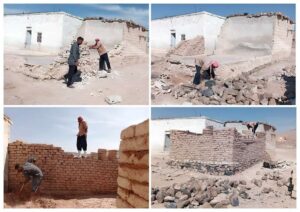
The restoration of 15 traditional mudbrick domes across 8 dwellings, carried out collaboratively by local craftsmen and residents, has not only reinstated physical structures but also reinforced collective identity and social cohesion.
Beyond the architectural achievements, the project generated employment opportunities for skilled and unskilled labourers, contributing to local economic revitalization.
The improved physical environment has created conditions favourable to future eco-tourism initiatives, positioning the village as a site of cultural interest and sustainable development.
The restoration of partially collapsed homes has made it possible for displaced families to return, improving their living conditions despite the continued absence of basic infrastructure.
The initiative has catalysed broader discussions around rural development, with attention shifting toward critical needs such as access to water, electricity, and transportation.
Importantly, the project has emphasized the role of cultural heritage in reconstruction processes, particularly in marginalized and rural regions. Through documentation, awareness campaigns, and advocacy, it has drawn attention to the architectural and social value of traditional mud construction.
The intervention avoided prescriptive planning, instead enabling the village to evolve through its own agency, resources, and knowledge systems.
By coordinating efforts and facilitating support rather than imposing external designs, the project has respected the community’s autonomy. As a result, Bathet Um Myal now stands as a testament to the effectiveness of participatory restoration in preserving heritage while fostering sustainable, locally grounded futures.