
Esplugues de Llobregat, a city of just over 48,000 people spread across 4.6 square kilometres, sits at the edge of Barcelona, acting as both gateway and metropolitan hub. Known for its strong biomedical and pharmaceutical industries, alongside agri-food and ICT, the city also carries a long tradition of civic participation and community networks. Since 2019, it has been weaving the Sustainable Development Goals (SDGs) into local life through concrete initiatives.
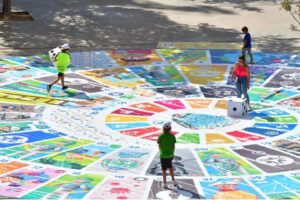
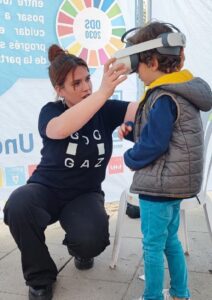
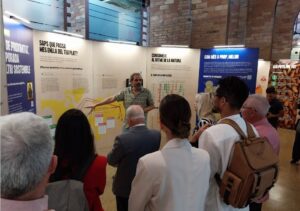
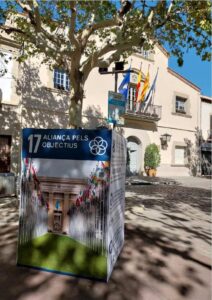
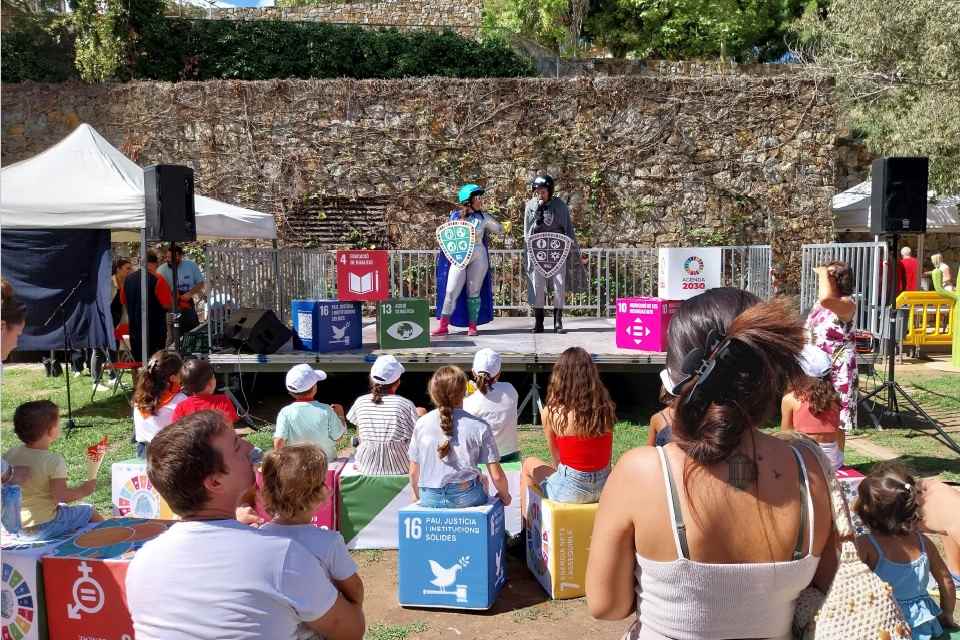
In 2023, Esplugues took a bold step: it turned the entire city into a game board. The project, Misión ODS, grew out of the community’s playful spirit and its commitment to the 2030 Agenda. More than one hundred actions—designed with local organizations, schools, and businesses—were rolled out. Over six months, more than 10,000 residents engaged in a mix of activities: an interactive mobile game, citywide events, talks and exhibitions, immersive VR sessions, online mini-games, inclusive board games, and even SDG totems spread through the streets.
Two characters, PODS—optimistic and proactive—and NODS—sceptical and disengaged—accompanied players, making the challenges of sustainable development tangible and relatable.
The project crossed sectors and media, blending education, entertainment, and strategy. Partnerships were built locally and internationally, creating opportunities to share best practices. From June to December 2023, the SDGs were present in daily conversations, in schools, in shops, and in public spaces. Every goal was addressed, offering both individual and collective pathways for action.
Care was also taken to reduce the project’s own footprint: durable and reusable materials replaced single-use options, and sustainable merchandise was introduced. A local economic strategy rewarded players with vouchers for neighbourhood businesses, turning awareness into direct support for commerce.
Associations gained new tools and visibility, while educational capsules helped businesses and organizations align with the 2030 Agenda.
Misión ODS was more than a campaign—it was the opening chapter of Esplugues’ 2030 Urban Agenda, the strategic framework guiding the city’s future. And the story continues: in 2024, Misión Energía was launched, focusing on SDGs related to the planet, adding another layer to this ongoing collective mission
Esplugues de Llobregat faces the complex challenge of integrating global sustainability goals into the fabric of a compact urban environment of just 4.6 km² and more than 48,000 inhabitants. Its position as a gateway to Barcelona generates both opportunities and pressures, requiring the city to reconcile metropolitan dynamics with the needs of its own community.
The challenge lies in ensuring that citizens, businesses, institutions, and associations understand and adopt the Sustainable Development Goals (SDGs) in their daily activities. Awareness of the 2030 Agenda remains uneven, and engagement levels vary across social and economic sectors. Encouraging collective responsibility while avoiding fragmentation is essential. Environmental issues add urgency, with the demand to reduce ecological impact, encourage sustainable consumption, and promote healthier lifestyles. At the same time, economic resilience must be strengthened by supporting local businesses in adapting to new global frameworks. Socially, the city must sustain its tradition of civic participation while reaching broader audiences, including young people, seniors, and diverse cultural and linguistic groups. Gender equality, digital inclusion, and accessibility remain cross-cutting challenges. Finally, ensuring that knowledge and experiences are effectively communicated, shared, and transferable is necessary for Esplugues to align with broader regional and international sustainability efforts.
The Misión ODS project transforms Esplugues de Llobregat into a city-wide game board, embedding the Sustainable Development Goals (SDGs) in daily life and linking them to urban development. The initiative fosters collaboration between public institutions, private actors, and civil society, aligning with SDG 17.17 on effective partnerships.
More than 10,000 residents have participated through inclusive and accessible activities, strengthening social cohesion and broadening awareness of sustainability. Local businesses are integrated into the game’s ecosystem, with purchase vouchers rewarding players and directly benefiting the community economy.
Environmental sustainability is prioritized by using reusable materials and eco-friendly products, while activities highlight climate action and sustainable food. Educational initiatives promote both individual and collective responsibility across all SDGs, including gender equality, addressed through dedicated content and resources for SDG 5.
Gamified tools such as QR codes, online mini-games, virtual reality, and thematic exhibitions combine digital innovation with public engagement. Documented results ensure replicability, offering other cities a practical model to advance the 2030 Agenda.
The Misión ODS project in Esplugues de Llobregat implemented more than one hundred actions, created or co-created with over 120 organizations, including associations, educational centres, businesses, and the Hospital Sant Joan de Déu.
This broad participation demonstrates a strong capacity for collaboration between municipal services, civil society, and the economic sector. An internal operational committee, coordinated by the Strategic and International Projects Service, ensured coherence and cross-cutting involvement.
Citizen engagement reached more than 10,000 people, fulfilling the project’s primary objective of raising awareness of the Sustainable Development Goals (SDGs).
Participation was structured on three levels: dissemination of the initiative, acting as an interactive game point, and organizing city activities linked to the mission.
The impact of the actions is evidenced by several results. The Game, Sport, and Percussion Festival, with activities designed around the SDGs, revealed that 35.5% of participants discovered the goals through the event, and 73.3% of organizations perceived an improved understanding among attendees.
The interactive game registered 141 players, with 3,791 QR scans, and 1,704 challenges completed, also involving educational groups.
The exhibition Eat, Act, Impact attracted more than 1,000 visitors; 91% reported adopting healthier and more sustainable dietary habits, and all participants gained greater awareness of sustainable food systems.
Communication efforts expanded the project’s reach through 200 posts across municipal platforms, 13 TikTok videos, articles in the local magazine, and audiovisual content totalling 1,500 views.
A final survey confirmed the effectiveness of the initiative: 94.9% of respondents understood the SDGs, with 42.4% attributing this knowledge directly to Misión ODS.