
Mannheim, a city of 330,000 with a surrounding region of 2.5 million, is shaped by people from 170 nations and traditions. For decades, its strength has come from a wide mix of industries—automotive, energy, chemicals, commerce, finance, and a steadily growing creative and start-up scene.
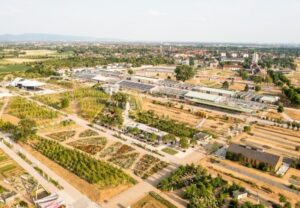
In 2014, a new chapter began when the Bundesgartenschau Mannheim 2023 gGmbH was founded. The mission was bold: transform 230 hectares of former military grounds into a green corridor and host the German National Garden Show in 2023.
One year later, the United Nations adopted the 2030 Agenda with its 17 Sustainable Development Goals. For Mannheim, this global call for change became an invitation to rethink its own future. At the Habitat III conference, where the role of cities in shaping a sustainable world was emphasized, Mannheim’s Lord Mayor announced that the city would anchor the SDGs locally. This promise evolved into “Mannheim 2030,” a vision co-created with residents through a 15-month participation process.
“Mannheim 2030” is more than a plan; it is embedded in the city’s management system.
Targets are set across departments, aligned with the budget, and openly discussed with citizens. Through the Urban Thinker Campuses of the UN-Habitat World Urban Campaign, the vision remains a living document—reviewed, debated, and adapted as challenges and opportunities change.
The withdrawal of US military forces in 2014 left behind vast areas of land. Many argued for quick redevelopment into logistics hubs, but Mannheim chose another path. Guided by its 2030 vision, the city designed a climatic green corridor on the Spinelli Barracks site.
The plan combined ecological open spaces, urban cooling, and living space, with 30 percent dedicated to social housing.
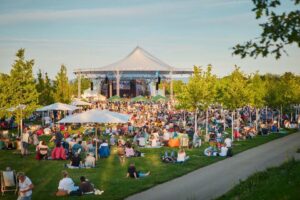
The National Garden Show (BUGA) became the vehicle to realize this transformation. Under the guiding theme of the SDGs, the event connected urban greening, biodiversity, local recreation, and housing.
What had once been a closed-off military compound was reshaped into an open, sustainable landscape—an example of how global goals can take root in local soil.
Mannheim faces complex challenges typical of rapidly evolving urban regions. With a population of 330,000 in the city and 2.5 million in the surrounding region, it is home to residents from 170 nations, encompassing diverse cultures, religions, and socioeconomic backgrounds. This diversity brings both opportunity and complexity in delivering equitable services, ensuring social cohesion, and addressing the needs of all citizens.
Economically, Mannheim relies on a mix of traditional industries—automotive, energy, and chemicals—alongside commerce, finance, and a growing creative and start-up sector. Balancing economic growth with environmental sustainability, fair labour practices, and innovation demands integrated strategies.
The city also faces environmental and climatic pressures. Urban heat islands, limited green spaces, and increasing CO2 emissions challenge air quality, public health, and resilience to climate change. The dense urban fabric and historical development patterns restrict opportunities for large-scale interventions while amplifying the need for efficient, multifunctional land use.
Socially, the city must ensure access to housing, education, and recreational areas while managing disparities across districts. Rapid urbanization, demographic shifts, and the integration of former military sites add further complexity. Mannheim’s challenge lies in simultaneously addressing economic, social, and ecological pressures within a dynamic and diverse urban context.
Mannheim’s approach to sustainable urban development emphasizes citizen participation, integrated governance, and the localized implementation of the SDGs. The city combines economic, social, and ecological objectives, collaborates in international networks, and shares knowledge to enable replication in other urban contexts. The guiding principle is cooperative action, with outcomes driving decision-making. The underlying premise is that the future of sustainability will be determined in cities.
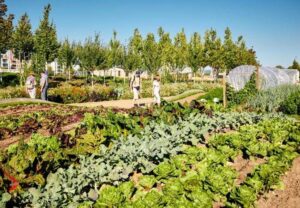
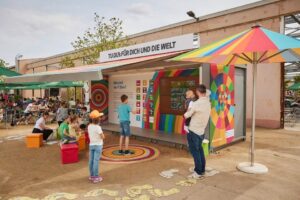
The National Garden Show translated this vision into practice. the event focused on four strategic themes: climate, environment, energy, and food security. Workshops, exhibitions, educational programs, and horticultural displays demonstrated practical solutions for urban sustainability, from small-scale home gardens to climate-adapted infrastructure.
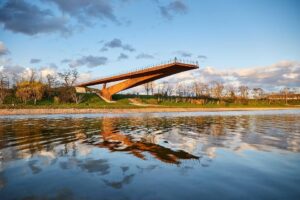
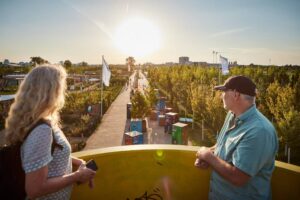
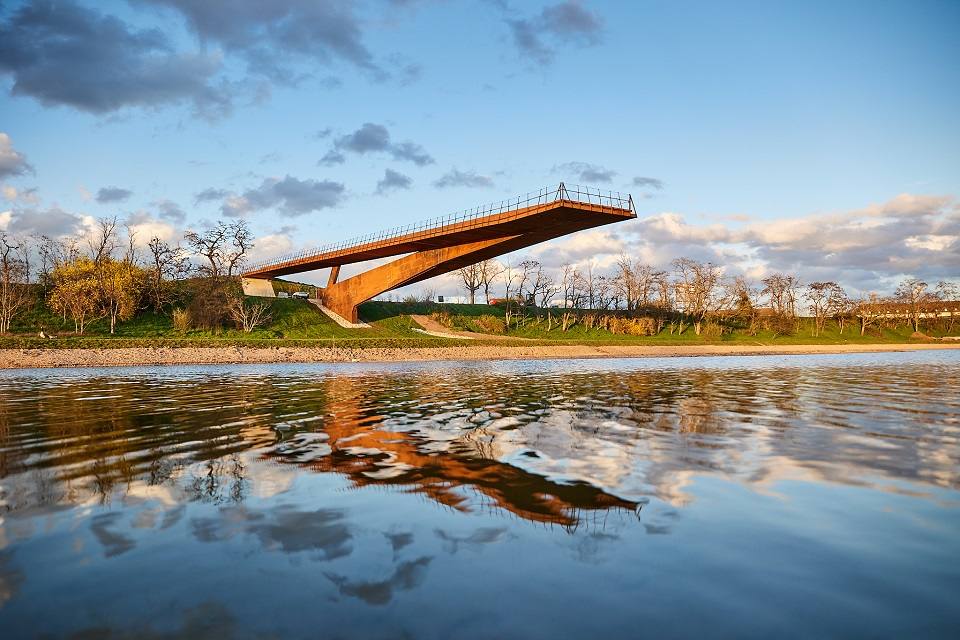
The central project of BUGA 23 was the creation of a 230-hectare green corridor, including the former Spinelli military site. Designed over ten years with extensive public participation, the corridor integrates ecological restoration, climate adaptation, biodiversity protection, and recreational spaces. It illustrates how urban development can harmonize with nature, creating a resilient, inclusive, and sustainable environment. The project exemplifies a transferable model for cities seeking to implement SDGs through long-term planning and citizen engagement.
Mannheim has established a structured management model for the localized implementation of the Sustainable Development Goals (SDGs). Its foundation rests on four pillars: the “Mannheim 2030” vision co-developed with citizens and regularly updated through Urban Thinker Campuses; a strategic city management system that integrates this vision into administrative goals and the municipal budget, complemented by an annual Voluntary Local Review (VLR) as both a local steering tool and a global reporting instrument; active participation in international city networks such as the EU Urbact Network for Sustainable Governance; and the realization of lighthouse projects, notably the Federal Garden Show (BUGA 23) and the Local Green Deal.
BUGA 23 represented a large-scale demonstration of the SDGs in practice. It addressed all 17 goals, translating them into tangible solutions to pressing urban challenges, including sustainable food production, renewable energy generation, climate adaptation, and biodiversity protection. With 2.28 million visitors, the event not only strengthened Mannheim’s visibility as a frontrunner of sustainable urban transformation but also disseminated knowledge and practical examples to a broad audience.
A key legacy of BUGA 23 is the permanently landscaped 230-hectare green corridor in the northeast of the city. This area, spanning several districts, mitigates urban heat effects by reducing sealed surfaces and ensuring fresh air supply from the Odenwald mountains, resulting in an estimated cooling effect of 1.5 degrees in the city centre.
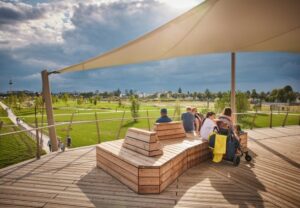
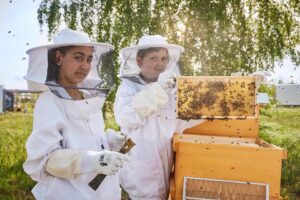
Beyond its climatic impact, the corridor secures valuable habitats (16 hectares newly created), enhances local biodiversity, and provides accessible spaces for recreation, education, and sports. The project thus consolidates open spaces as integral elements of Mannheim’s sustainable urban developmen