

In the margins of Brazil’s cities, where informal settlements stretch across the hillsides and floodplains, where basic services are scarce and families often build their homes from whatever materials they can find, a movement is quietly reshaping the landscape — not just physically, but socially and emotionally. This is the work of TETO Brasil, a youth-led organization committed to addressing poverty through action, dignity, and collaboration.
TETO’s mission goes beyond building emergency housing. It creates spaces of possibility. In neighbourhoods long overlooked, it brings together volunteers and residents to imagine, design, and construct something better — together. Each project starts with listening: understanding the people, their challenges, and their hopes. It’s a slow, respectful process that centres the community, not as passive recipients of aid, but as partners and protagonists of change.
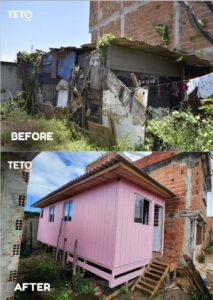
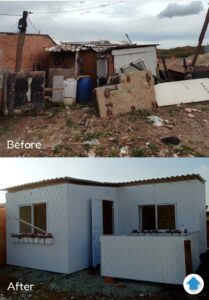
The Seed House initiative is a program aimed at families living in the most vulnerable conditions. It offers more than protection from the elements. It’s a foundation for stability, comfort, and renewed confidence. Built using sustainable materials and techniques, including rainwater harvesting systems and other green technologies, each house is carefully designed to minimize environmental impact while improving daily life.
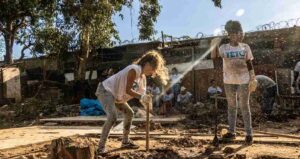
But its impact runs deeper than the physical structure. Residents actively participate in every phase of the project, from planning to construction. This involvement fosters a profound sense of ownership, community pride, and agency.
Local labour is employed whenever possible, channelling resources into the neighbourhood and stimulating micro-economies. Through this process, bonds are strengthened not only between families, but among neighbours, generating solidarity and trust.
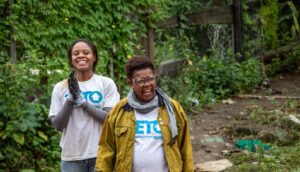
For the young volunteers, many of whom are experiencing these communities for the first time, it’s a transformative experience.
They gain more than practical skills — they come away with a deeper understanding of inequality, resilience, and the power of collective action.
The Seed House model shows what’s possible when social innovation is rooted in empathy and co-creation. Its lessons — about sustainability, empowerment, and shared leadership — have value far beyond Brazil.
Each home is a small but powerful example of how housing can be a tool for justice, a catalyst for change, and a step toward truly inclusive development.
Cities across Brazil face complex and interrelated challenges that hinder equitable and sustainable urban development. Informal settlements, or favelas, continue to grow in areas lacking basic infrastructure, public services, and secure land tenure. These environments are often characterized by precarious housing, overcrowding, and limited access to education, healthcare, and employment opportunities. Poverty remains a persistent reality for many residents, contributing to cycles of social exclusion and limiting upward mobility.
Gender inequality further compounds these challenges, with a significant proportion of households in informal settlements led by women, many of whom shoulder the responsibilities of caregiving and income generation with minimal institutional support. These women often face additional barriers in accessing employment, housing, and community participation, making them disproportionately vulnerable.
Climate change worsens vulnerabilities, with extreme weather events like floods and heatwaves disproportionately affecting low-income communities in high-risk areas. The combination of environmental degradation and social inequality means marginalized populations face multiple crises, exacerbating systemic disparities and threatening urban resilience and sustainability.
This initiative seeks to generate integrated and measurable impact by addressing key challenges related to housing, inequality, and environmental sustainability, in alignment with the Sustainable Development Goals (SDGs). Its primary objective is the provision of safe, adequate, and dignified housing for populations living in extreme vulnerability, directly contributing to SDG 1 (No Poverty) and SDG 11 (Sustainable Cities and Communities). Secure housing is treated not as an end, but as a platform for broader improvements in well-being and living conditions.
The project uses a participatory approach, focusing on women-led households and engaging residents in designing, building, and using housing units. This method supports SDG 5 (Gender Equality), SDG 8 (Decent Work and Economic Growth), and SDG 10 (Reduced Inequalities) by promoting inclusion, enhancing local skills, and creating job and training opportunities.
Environmental sustainability is a central component. Using eco-efficient materials and the integration of green infrastructure—such as rainwater harvesting systems and passive design strategies—the project supports climate resilience and aligns with SDG 13 (Climate Action). Overall, the initiative offers a replicable model that links social inclusion, economic opportunity, and environmental responsibility to promote sustainable urban transformation.
The Seed House initiative has delivered significant social and environmental impact in highly vulnerable informal settlements.
To date, it has provided secure and sustainable housing for 62 individuals across three different favelas, with over 80% of the beneficiary households led by women. This intervention not only improves living conditions but also promotes gender equity and strengthens social inclusion.
Beyond the physical provision of housing, the project has contributed to enhancing community cohesion and resilience. By involving residents in the planning and construction process, the initiative fostered a collective sense of ownership and belonging.
In parallel, the engagement of more than 360 young volunteers has generated opportunities for civic participation and youth development, reinforcing intergenerational collaboration and social capital.
The project’s recognition as the best solution in the «Equitable and Collaborative Society» category at the Smart City Latam Congress 2023 highlights its relevance as an innovative and scalable model. Public visibility has also been amplified through media coverage, with over 25 published articles and more than 40,000 individuals reached via digital platforms.
To assess its effectiveness, the initiative employs a mixed-methods evaluation framework, including satisfaction surveys with residents, analysis of socioeconomic indicators, and environmental monitoring.
Continuous presence in the communities through local teams enables qualitative data collection, case studies, and identification of success factors and implementation challenges.
This integrated monitoring approach has enabled a robust understanding of the initiative’s outcomes and provided critical insights for future adaptation.
As such, the Seed House model demonstrates the potential of participatory, sustainable housing to advance inclusive urban development.