

In 2013, a group of designers, artists, and technologists in Barcelona came together to explore a question that would shape their journey for years to come: What if data could speak to us emotionally, like stories do?
From that starting point, Domestic Data Streamers began crafting new ways of communicating data—ways that could live not just on screens, but in classrooms, prison yards, museum halls, and even the corridors of the United Nations.
Their work, shaped by curiosity and urgency, has since travelled across 45 countries and found a home in institutions like the Tate Modern, the Hong Kong Design Institute, and the California Academy of Sciences.
One of their most profound projects, Synthetic Memories, began in 2022 with a quiet question posed in a dementia care centre: What does it mean to forget? Using generative AI, the project seeks to reconstruct personal memories that might otherwise be lost—due to age, illness, or forced migration.
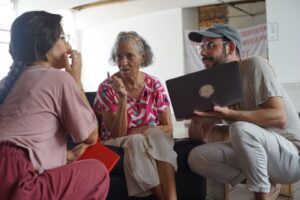
Through long, careful conversations, individuals are invited to describe memories in vivid detail.
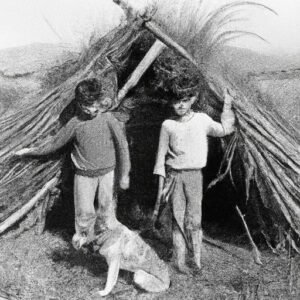
These narratives are then translated into AI-generated images—visual echoes of the past—refined through back-and-forth dialogue until they feel true to the storyteller.
What began as a pilot in reminiscence therapy quickly grew into something more. The project now serves communities displaced by conflict and crisis, offering a way to reclaim fragments of personal history.
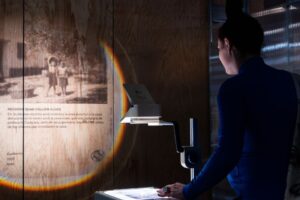
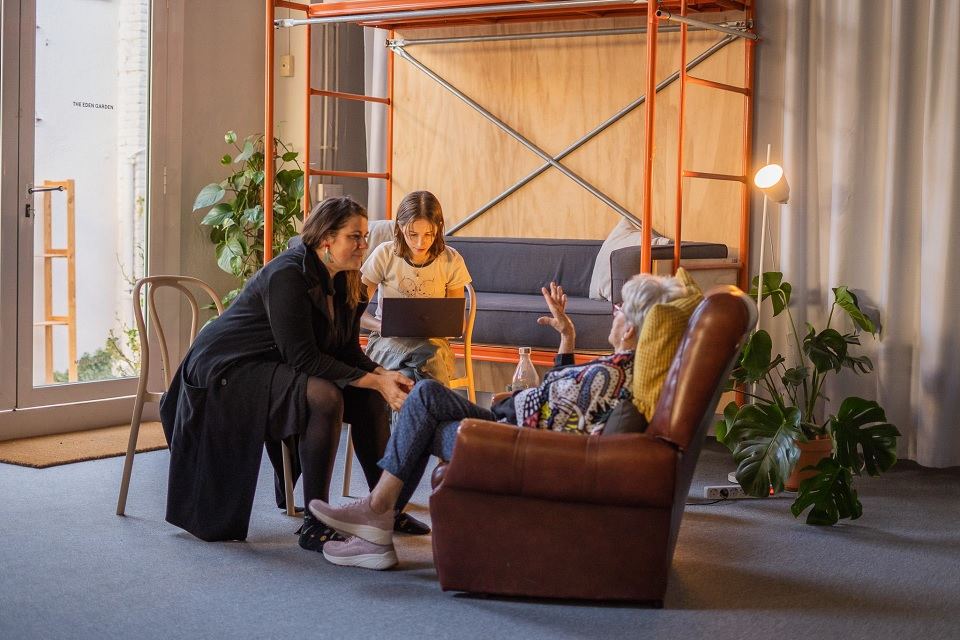
In the summer of 2024, the Citizens’ Office of Synthetic Memories opened its doors in Barcelona, offering walk-in sessions where people could collaborate with a team to visually reconstruct moments from their lives. These sessions often end with a shared decision: whether to add their story to a growing public archive.
Supported by institutions such as the Barcelona City Council, Google Arts, and the University of Toronto, Synthetic Memories continues to evolve. With upcoming collaborations across borders and disciplines, the team is pushing further—refining the technology, deepening the ethical conversations, and asking again: What do we lose when we forget—and what do we gain when we remember together?
Barcelona, like many contemporary cities, faces a growing challenge in preserving its cultural memory amid rapid social and demographic shifts. Global displacement due to war, political instability, and climate change has led to an influx of individuals whose personal histories often remain undocumented and at risk of disappearing.
At the same time, an aging population—affected increasingly by cognitive decline and dementia—threatens the continuity of local and collective memory. According to the WHO, over 55 million people globally are affected by dementia, and their stories, embedded in everyday life, are fading quietly.
This erosion of memory is compounded by the weakening of intergenerational relationships. In many urban settings, including Barcelona, older and younger generations often live parallel lives with limited opportunities for meaningful interaction.
The lack of shared spaces, time, and social frameworks for encounter contributes to the loss of oral histories, traditions, and experiences that form the fabric of cultural identity. As the pace of life accelerates, and digital culture dominates, essential aspects of human history risk being left behind. The result is a disconnection not only from the past but also from the values, resilience, and narratives that could guide societies toward greater empathy and cohesion.
This project aims to preserve personal and collective memory, fostering inclusive and peaceful societies. It supports UN Sustainable Development Goal 16 by focusing on two groups: individuals displaced by war and those in the early stages of dementia. The goal is to create tools that help these communities use generative AI to transmit their cultural heritage across generations.
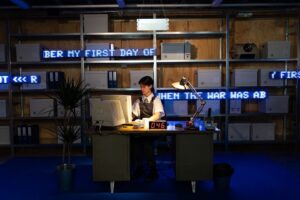
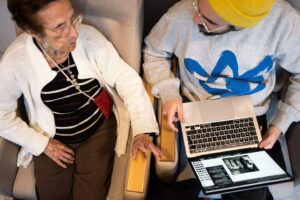
A central function of the project is to facilitate intergenerational exchange, encouraging older individuals to share their experiences with younger people. This process not only preserves memory but also strengthens social cohesion and mutual understanding. Collaborations have included survivors of police violence under the Spanish dictatorship and migrant communities from Korea, Argentina, Bolivia, and Brazil. These narratives have been documented and exhibited in cultural institutions such as Casa do Povo (São Paulo), the Design Museum (Barcelona), and TED (Vancouver).
The project upholds strict ethical standards, ensuring informed consent and privacy while archiving visual and oral testimonies for cultural preservation and education.
Through collaborations with academic and cultural institutions, it refines its methods and expands its impact, showcasing AI’s potential to tackle complex ethical and social issues transparently.
To date, 185 individuals have contributed to the creation of synthetic memories, forming a rich and diverse archive. An additional 200 participants are expected to join the initiative in the coming month, significantly expanding the dataset.
The project is being developed in collaboration with four universities: the University of Toronto and the University of British Columbia, both prominent in reminiscence therapy research; Elisava in Barcelona, responsible for evaluating the Public Office pilot; the Polytechnic University of Catalonia (UPC), which is integrating accessibility tools into its AI curriculum; and the School of Visual Arts in New York, examining the ethical dimensions of synthetic memory through its Master’s in Product Design. Discussions are also underway to incorporate Columbia University into the program.
Cultural engagement has been reinforced through partnerships with the Design Museum of Barcelona and Casa do Povo in São Paulo. These institutions have facilitated active community participation and contributed to strengthening collective memory through localized storytelling.
Five workshops with community associations have been completed, and 25 young students have been trained as interviewers and AI prompters, gaining practical experience in ethical data use and technological literacy.
The project has reached 35 elderly residents in two nursing homes, offering therapeutic value and emotional reconnection.
Support from the Barcelona City Council’s Innovation Office and collaboration with Google Arts have further extended the initiative’s public visibility and institutional relevance.
By integrating cutting-edge AI with cultural institutions, educational frameworks, and municipal support, the project demonstrates the potential of technology to preserve personal histories, promote intergenerational exchange, and support ethical memory reconstruction on a global scale.