
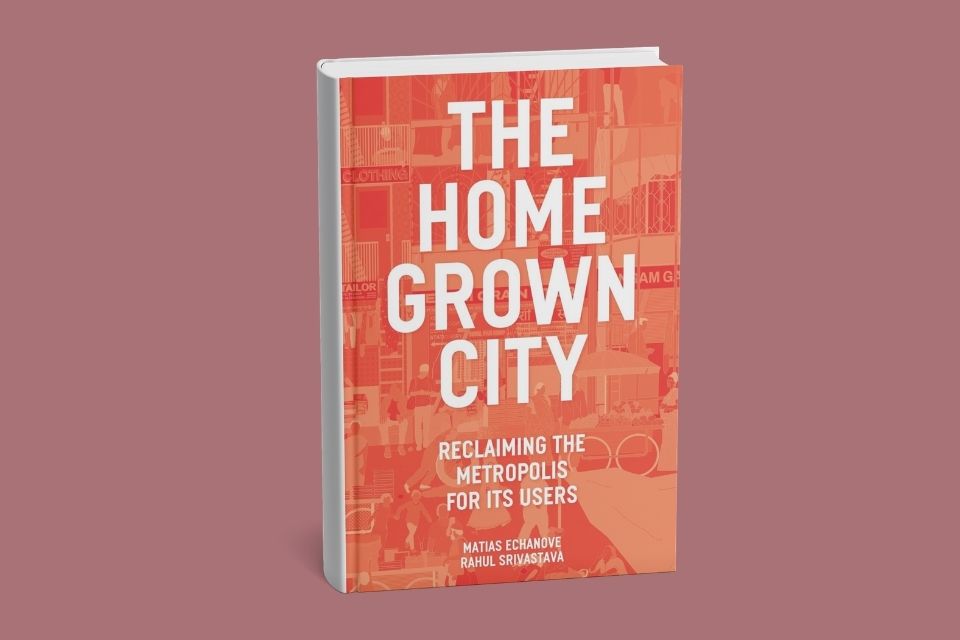
The book takes on a stubborn prejudice in urban planning. Slums, informal settlements, and other unplanned habitats are seen as the antithesis of the metropolis, yet the authors, Matias Echanove and Rahul Srivastava, founders of the design practice urbz, argue that these neighborhoods and their inhabitants have been unfairly dismissed and should be understood as partners in the story of cities. Over 3 billion people will live in such settlements by mid-century, and that the homegrown city is a fragile yet resilient part of the urban system that has been dismissed and brutalized for too long. That scale gives the thesis real urgency.
The core claim is that cities develop through the actions of the people who use them. The authors set this user-generated city against the speculative and commercialized approach that dominates the urban imagination today. In a seminar abstract, Echanove goes further, arguing that homegrown urbanism is a prevailing or latent condition everywhere and not a leftover of the so-called Third World. He draws on cases from India, Japan, Colombia, and Switzerland and proposes a method based on incremental transformation instead of the project-centric approach that dominates urban design. This is the book’s most interesting move, since it turns informality from a developing-world problem into a universal lens.
The authors write from practice, not from a distance. Their collaboration began in 2008 in Dharavi, a large Mumbai settlement developed by its inhabitants without architects, engineers or planners, and their collective urbz has since worked in Mumbai, Bogotá, São Paulo, Geneva and Seoul. The book is their first major publication summarizing more than a decade of practice. That grounding is probably its greatest strength. Rather than offering a list of abstract ideas on how the city ought to be, the authors base their vision on years of work in complex urban environments.
“The brilliance of The Homegrown City lies in its emphasis on a simple but rarely acknowledged truth: that the true experts of urban life are the inhabitants themselves—the local builders, artisans, and families who, through sheer ingenuity and collective agency, shape environments in ways that official planning often fails to imagine. Written by two researchers who have spent decades living and working in some of the world’s poorest neighborhoods, the book presents a deeply humane approach to urbanism, suggesting many practical modalities for improving the quality of urban life, even in crowded megalopolises.” – Amitav Ghosh, Author of The Great Derangement
The Homegrown City: Reclaiming the Metropolis for its Users is an important contribution to the literature on urban development. It brings together concepts and ideas that invite the audience to rethink urban theory and practice guiding us toward a new vision of urban worlds as laboratories for imagining and building alternative urban co-living.